
English| EUR
Suggested for you
More currencies
Choose a language
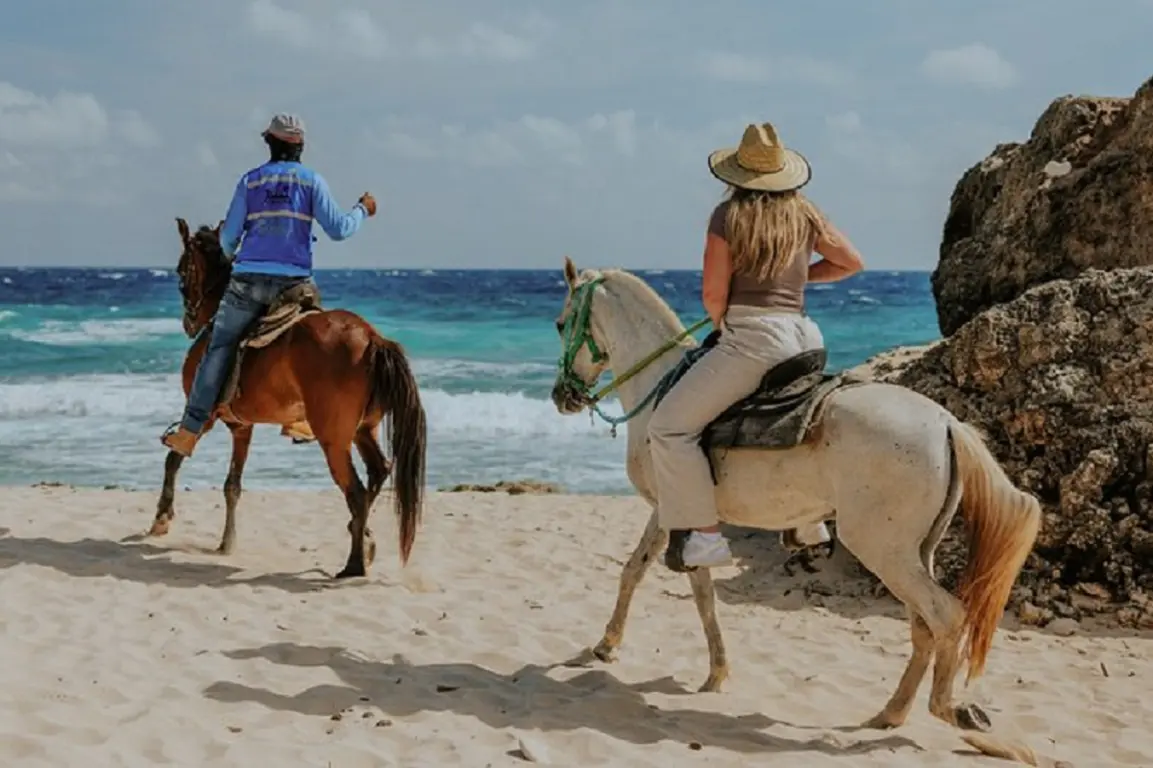
An aruba horseback ride tour to wariruri beach crosses rugged limestone trails and volcanic rock formations to reach a windswept shoreline where Atlantic waves crash against black stone cliffs. Tour operators lead small groups along the coastal path, navigating the same routes that once connected rural settlements to Noord's interior. This guide covers what to expect on the trail, how to prepare, and what makes the ride distinct from other Aruba equestrian experiences.
Quick answer
An aruba horseback ride tour to wariruri beach typically departs from stables near Noord and covers approximately 90 minutes to two hours round-trip, depending on the operator's route and pace. Tours run year-round, with early morning departures between 07:00 and 10:00 offering cooler temperatures and calmer horses. The beach itself is free to access with no entrance fee or facilities, and tours usually include 20 to 30 minutes of beach time before the return ride.
Wariruri Beach sits at the end of an unpaved coastal track where most vehicles cannot reach, making horseback access the most practical way to experience this stretch of Aruba's windward shore. The ride traverses cunucu scrubland dotted with divi-divi trees, crosses sections of exposed volcanic diorite, and follows centuries-old donkey paths that curve along limestone cliffs. Riders often spot wild goats and native kwihi birds in the brush, and the constant trade winds carry salt spray across the trail. Tour operators typically provide Paso Fino or Criollo horses accustomed to the rocky terrain and high winds. The pace alternates between walk and trot, with guides adjusting speed based on group experience and trail conditions. During the wet season from October through January, sections of the path can be slippery from brief rain showers, though tours rarely cancel. The final descent to the beach drops through a narrow gap in the rock formations, opening onto a wide crescent of dark sand and tidal pools. At Wariruri Beach itself, the surf is too rough for swimming, and the undertow makes wading dangerous. Most tours allocate time for dismounted exploration of the tide pools and photo opportunities against the dramatic rock arches that frame the northern end of the beach. The return route retraces the outbound trail, though some operators incorporate a loop through the inland scrub to vary the scenery. Riders should wear long pants, closed-toe boots or sturdy sneakers, and apply reef-safe sunscreen before departure — the sun reflects intensely off the pale limestone even on overcast days. Booking through a licensed stable ensures helmets, liability coverage, and horses matched to rider weight and skill level. Walk-up tours are uncommon given the logistics of coordinating equipment and guides, so advance reservation through an operator or visitor booking platform is standard. The experience suits intermediate riders comfortable with extended periods in the saddle, though beginners with basic walk-trot competence can manage the tour with attentive guidance.
“The final descent to the beach drops through a narrow gap in the rock formations, opening onto a wide crescent of dark sand and tidal pools.”
The best arrival window for your Aruba horseback ride tour to Wariruri Beach is 07:00–10:00. This early timeframe provides cooler temperatures for riding and ensures more stable trail conditions before the heat intensifies.
Cooler temperatures 26°C-28°C
This period offers the most comfortable conditions for horses and riders alike. It allows you to complete the journey before peak solar intensity.
Increased heat reaching 31°C
The trail conditions are drier and the sun is at its strongest. It is generally advised to avoid this period for strenuous activity.
Lowering temperatures 28°C-29°C
As the sun descends, the environment becomes more temperate. This is an alternative to early mornings for those avoiding midday heat.
Verdict: The best arrival window for your horseback ride is daily between 07:00–10:00 to capitalize on cooler environmental conditions.
Wariruri Beach is located on the rugged northern coast of Aruba. Accessing this remote area via horseback requires navigating unpaved desert trails that are best managed by professional tour operators.
Follow signs toward Noord, then utilize unpaved coastal roads leading to Wariruri Beach
Request a drop-off at the Noord trailhead access point
Follow marked equestrian trails from the designated stable departure points
Because the terrain consists of unmarked, rocky paths, travelers are advised to coordinate transportation through a guided horseback tour service to ensure safe arrival at the beach.
Wariruri Beach is a public coastal area with no entrance fees. Costs for horseback riding at this location are associated exclusively with professional tour operators who provide the horses, equipment, and guided services.
Verdict: There is no fee to access the beach itself, while total costs for a horseback ride vary based on the selected tour operator's package and duration.
Wariruri Beach is a public location accessible to the public 24 hours a day. Guided horseback ride tours operate according to their own independent schedules.
Wariruri Beach is a rugged, undeveloped coastal area where responsible riding protects fragile dune vegetation and nesting sites. Follow your guide's instructions to preserve the landscape and ensure safe passage for horses and riders.
Everything you need to know about aruba horseback ride tour to wariruri beach
Yes, the area is accessible seven days a week, from 00:00 to 23:59. Local tour operators frequently schedule their excursions to align with these open access hours.
There is no entrance fee for the location itself, as Wariruri Beach is a public area with no gated access. Costs associated with your visit typically only apply to the professional tour service you select for your excursion.
The best arrival window is 07:00–10:00 to take advantage of cooler temperatures and avoid the heat of the day. Scheduling your trip during these early hours ensures a more comfortable experience for both riders and horses.
Wariruri Beach is a natural, rugged coastal site with no facilities or restrooms. When planning your trip, ensure you bring necessary supplies such as water and sun protection for the duration of your outing.
While you can visit the beach on your own, participating in an organized equestrian outing provides a guided experience across the rugged northern terrain. Experienced guides manage the logistics of navigating the sandy paths and coastal cliffs safely.
Most professional operators require riders to meet specific weight and age requirements for safety reasons. You should review the policies of your chosen operator to ensure your group meets their specific guidelines for this northern Aruba landscape.